Emergency Locksmith in the 9th Arrondissement — Opéra, Grands Boulevards & SoPi
Whether you are locked out of a hotel room near Galeries Lafayette, a short-stay flat in SoPi after a late night out, or a townhouse in the Nouvelle Athènes, a vetted English-speaking locksmith reaches you in about 30 minutes. Call 01 87 66 55 39 — our English line is open around the clock, every day of the year.
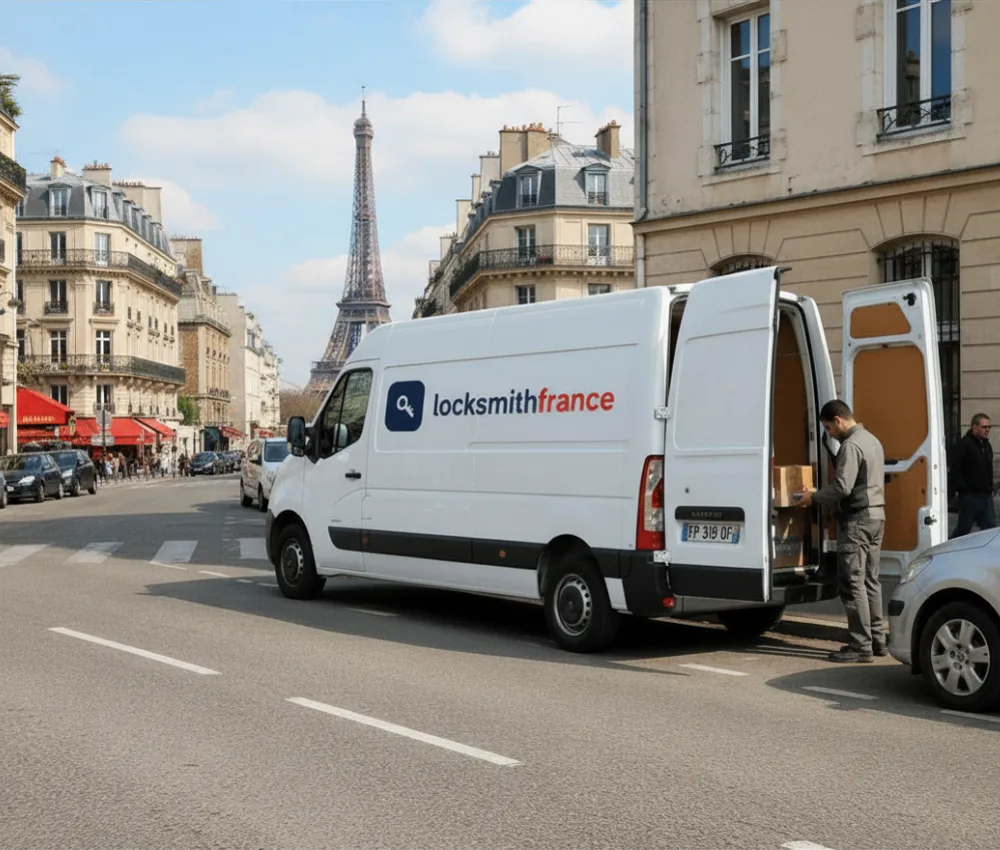
The Three Faces of the 9th — and What Each Means for a Locksmith Callout
The 9th arrondissement is three very different districts layered into one postal code: the grand shopping and theatre belt from the Palais Garnier down Boulevard Haussmann, the lively SoPi bar and restaurant scene south of Pigalle, and the serene Nouvelle Athènes pocket of early 19th-century townhouses near Saint-Georges. When something goes wrong with a lock in any of these three worlds — and it does, at every hour — locksmithfrance.com provides one English-speaking number that covers all of them.
locksmithfrance.com is a dispatch service, not a shop with a physical address. When you call 01 87 66 55 39, a real person answers in English, confirms a price range with you before anyone is sent out, and connects you with the nearest available vetted partner locksmith. In about 30 minutes — the realistic figure for most addresses in the 9th under typical conditions — a locksmith will be on your doorstep. Depending on the time of day and where exactly you are within the arrondissement, it can be faster; the figure is honest rather than a promised maximum.
The northern half of the 9th, from the Palais Garnier across to the Folies Bergère and the covered passages of the Grands Boulevards, is one of Paris's busiest transit zones for people who are not Parisian. Shoppers arrive at Galeries Lafayette and Printemps on Boulevard Haussmann from across Europe and beyond; theatre-goers stream in for evening performances at the Opéra or at the Grands Boulevards playhouses; tourists visit the Musée Grévin waxworks and the surrounding arcades. Many of these visitors are staying in the cluster of mid-range and business hotels that has grown up around the department stores precisely because of their central position. A hotel key card that demagnetises, a safe that will not open after a shopping-bag collision, or — more commonly — a short-stay apartment door that locks automatically and closes behind a guest carrying bags from Galeries Lafayette: these are the situations that generate calls in this part of the 9th.
The southern strip, known as SoPi (South Pigalle), draws a different crowd in the evenings. The bars and restaurants on Rue Jean-Baptiste Pigalle, Rue Frochot, and the streets around Place Pigalle stay busy well past midnight with a mix of locals and visitors. A lock problem at 1 a.m. in SoPi — a key left inside a flat, a door that has stuck in cold weather, a lock whose mechanism was already stiff before the final jolt of the evening finished it off — is a common-enough occurrence that our partner locksmiths who cover the 9th treat it as a normal part of the overnight workload. You will not be made to feel that calling at that hour is unusual.
The Nouvelle Athènes district, centred roughly on the streets around Notre-Dame-de-Lorette and Saint-Georges, is the quieter third face of the 9th. The elegant early 19th-century townhouses on streets like Rue Saint-Lazare, Rue la Bruyère, and Rue Chaptal were built for painters, writers, and the Parisian bourgeoisie of the July Monarchy era. Their doors and lock furniture reflect several generations of upgrading: original timber frames with modern reinforced cylinders fitted over the decades by successive owners. They are gracious buildings, but they are not standardised, and a lockout in one of them often involves a combination of a heavy entrance door and an individual flat door that may be more complex than it looks from the street. While you wait, the streets around Place Saint-Georges are well-lit and pleasant even late in the evening; the square itself or the nearby Rue des Martyrs — with its late-closing food shops and café terraces — gives you a comfortable, visible spot to stand until the locksmith arrives.
The 9th arrondissement's one-way street network, particularly around the department stores and the back streets of SoPi, can add time if a locksmith is routed to the wrong entry point. When you call, give us the nearest obvious reference — Opéra, Chaussée d'Antin–La Fayette, Pigalle, Saint-Georges, Notre-Dame-de-Lorette, the Folies Bergère — and we will pass that directly to the partner locksmith for their approach. Precision at the dispatch stage is the simplest way to get a faster arrival.
Where we get called out
One number for the whole area. Tell us the street or nearest métro and we route the closest available locksmith — usually on site in about 30 minutes.
Palais Garnier & Place de l'Opéra
The area directly around the Opéra has a dense concentration of business hotels, corporate lets, and short-stay apartments catering to theatre-goers and business visitors; self-locking flat doors and hotel-room access issues are the most frequent calls in this pocket.
Boulevard Haussmann — Galeries Lafayette & Printemps
Europe's most famous department-store strip generates a specific type of lockout: shoppers who have returned to a short-stay flat loaded with bags, set their key down, and let the door close; hotels nearby also see key-card faults at peak check-in periods.
Grands Boulevards & the Folies Bergère
The covered passages, theatres, and cinemas from Rue du Faubourg-Montmartre east to the Bonne Nouvelle area attract evening visitors who may be staying in nearby rental flats; post-show lockouts after 11 p.m. are common here.
South Pigalle (SoPi) — Rue Frochot & surrounds
The trendy bar and restaurant streets south of Pigalle are active well past midnight; flat doors in the older walk-up buildings on these streets can stick or jam in winter, and late-night lockouts here are a weekly occurrence for our partner locksmiths.
Nouvelle Athènes & Saint-Georges
The elegant townhouses between Notre-Dame-de-Lorette and Place Saint-Georges house a mix of owner-occupiers and furnished lets in buildings whose locks span a century or more of upgrades; the area is quiet at night but well-lit and easy for a locksmith to reach.
Rue des Martyrs & Notre-Dame-de-Lorette
This foodie market street and its surrounding residential blocks attract a mix of local residents and expats in medium-term rentals; the addresses here are straightforward to reach but the buildings often have both a digicode on the street door and a separate cylinder lock on the flat.
What we handle in the 9th
Every job below is quoted in English before work begins — the price is confirmed with you, not presented as a fait accompli when the door is open.
Hotel-Area & Short-Stay Apartment Lockout
Guests staying in the hotels and rental flats around Galeries Lafayette, Printemps, and the Palais Garnier account for a large proportion of calls we receive in the 9th. Whether it is a self-locking flat door, a safe that will not release, or a key left inside after a day on Boulevard Haussmann, our partner locksmiths handle these quickly and without drama.
SoPi & Late-Night Residential Lockout
The bars and restaurants of South Pigalle keep the southern 9th busy until the early hours, and flat doors in this part of the arrondissement are opened late at night more than almost anywhere else in Paris. Our dispatch is active around the clock; a locksmith can typically be with you in about 30 minutes regardless of the time you call.
Nouvelle Athènes Townhouse & Heritage Building Lock Work
The older buildings of the Nouvelle Athènes district require a locksmith who understands the particular combination of period door frames and more recently fitted high-security cylinders. Non-destructive opening is the priority; where a cylinder needs replacing, the cost is agreed with you before any part is touched.
Lock Change & Security Upgrade After a Move or Key Loss
Moving into a flat on Rue des Martyrs, near Saint-Georges, or in one of the Grands Boulevards residential buildings, or concerned about a key that has gone missing? Our partner locksmiths fit quality replacement cylinders appropriate for your door type and advise honestly on the level of upgrade your specific situation warrants.
Haussmann hotel corridor, SoPi walk-up, or Nouvelle Athènes townhouse — whichever face of the 9th you're locked out in —
It's one process that covers all three →
Same Arrondissement, Three Different Lock Eras
The 9th arrondissement is less homogeneous than its neighbours, and that variety matters when a lock problem arises. The northern band — from the Palais Garnier to the upper end of Boulevard Haussmann — is a high-footfall commercial zone where the buildings tend to be Haussmann-era apartment blocks converted to mixed hotel-and-residential use, or purpose-built hotels from the early 20th century. The locks on individual flats and hotel rooms here are often modern and well-maintained precisely because property managers in a tourist-facing area know that a poorly functioning lock generates complaints. The most common job in this zone is not a worn-out mechanism but a situational lockout: a door that has closed on an auto-latch while the occupant stepped into the corridor, or a spare key that was never collected from the management office. These are fast, clean jobs for a competent locksmith.
The SoPi section is different in character and different in the demands it places on the service. The buildings south of Pigalle, on and around Rue Frochot and Rue Jean-Baptiste Pigalle, are typically older walk-up immeubles from the late 19th or early 20th century, with heavier timber entrance doors and older cylinder types that have been retrofitted with more modern hardware at various points. A busy social district with a late-night population creates a higher frequency of late-night callouts — that is simply the arithmetic of many people coming and going at unconventional hours. Our partner locksmiths in the 9th are not surprised by a call at 2 a.m. in SoPi; the dispatch team will confirm a price and get someone moving promptly. The service does not change by the hour.
The Nouvelle Athènes is the most architecturally distinctive part of the 9th and in some ways the most technically demanding for lock work. The townhouses on streets like Rue Chaptal, Rue la Bruyère, and the streets fanning off Place Saint-Georges were built in a concentrated burst between roughly 1820 and 1850, when this part of Paris was being developed as a fashionable residential quarter for the cultural and commercial bourgeoisie. Many of those buildings have retained their original stone door frames and timber doors, which have then been upgraded piecemeal: a modern multipoint lock on one flat, a reinforced cylinder on another, an original mortise on a third. No two front doors are identical. A locksmith working in the Nouvelle Athènes needs to assess the specific mechanism before attempting an opening, rather than defaulting to a standard technique. Our partner locksmiths who regularly cover the 9th know this district's particular character.
Locked out in the 9th right now?
Don't try to explain it in French to a stranger. Tap to call and talk to someone in English this minute — a locksmith is usually with you in about 30 minutes.
Nearly 59,000 residents packed into one of the smaller central arrondissements
The 9th holds 58,951 residents across just 2.18 km², a density of 27,042 people per km² — high enough that the three very different districts described above (Opéra, SoPi, Nouvelle Athènes) sit far closer together than their distinct characters suggest.
That density, combined with postcode 75009's position as one of the busiest non-station transit zones in the city, is exactly why lock emergencies here don't cluster around a single hour — there's simply a lot of door, and a lot of people, in a small space.
- 58 951Residents
- 2.18 km²Surface area
- 27 042/km²Population density
- 75009Postcode
Our process in Opéra
Four steps, start to finish — no French required, no surprise costs.
Call & diagnose
You call, describe the problem in English, we work out what's needed (lockout, broken key, lock change) and quote a clear price upfront.
Locksmith dispatched
We brief a vetted local locksmith on your situation and send them straight to Opéra — usually with you in about 30 minutes.
On-site fix
The locksmith handles it on the spot: non-destructive opening where possible, repair, or replacement — price confirmed before any work starts.
Follow-up & guarantee
Work is guaranteed; if anything's not right, you call the same English-speaking line and we sort it out.
Where we cover in Opéra
Other Paris areas we cover near Opéra
Same English-speaking dispatch, same ~30-minute response — here are the closest arrondissements to Opéra that we also serve.
Bourse0.6 km
The old stock-exchange quarter and Grands Boulevards. Bourse — 0.6 km away
Gare du Nord1.2 km
The Eurostar/Thalys terminus area. Locksmith in Gare du Nord →
Louvre1.4 km
Louvre, Palais-Royal and the Rivoli arcades. Louvre (1.4 km)
Haut-Marais1.8 km
Boutique-lined streets north of the Marais proper. See Haut-Marais locksmith page
Champs-Élysées1.8 km
Avenue shops, embassies and grand hotels. Champs-Élysées, 1.8 km from here
Questions from people locked out in the 9th
Locked Out Somewhere in the 9th? One Number Covers All of It.
Call 01 87 66 55 39 now — our English-speaking dispatch is available around the clock, a vetted locksmith is typically with you in about 30 minutes, and the price is agreed in English before any work begins.